
Relationship Improvement Without Generic Self-Help: What Really Works
Written with AI assistance under our editorial guidelines
Authentic relationship improvement requires moving beyond recycled self-help platitudes that dominate the $13 billion industry. Rather than generic advice like "just communicate," lasting change demands research-backed strategies grounded in psychological nuance, cultural context, and honest acknowledgment of each couple's unique circumstances. Surface-level tips perpetuate cycles, while deeper, evidence-based approaches yield tangible results.
Romantic relationships—messy, exhilarating, fragile, and, at times, soul-crushing. If you’ve ever found yourself drowning in recycled phrases like “just communicate” or “put yourself first,” you know the taste of disappointment that comes with self-help fluff. The search for authentic relationship improvement without generic self-help is more than a trend; it’s a quiet rebellion against years of surface-level advice. In a culture saturated with listicles and pop psychology, the hunger for raw, research-backed truth is real. This guide slices through the noise, confronting what actually works (and what doesn’t) in the gritty, unpredictable world of modern intimacy. There are no magic hacks here—just eye-opening strategies, uncomfortable truths, and an exploration of new frontiers like AI relationship coaching. Prepare for a journey that’s equal parts unvarnished honesty and actionable insight. If you’re ready to break the cycle and transform your connection, keep reading—because the clichés end now.
Why generic self-help advice leaves relationships stuck
The self-help industrial complex: a brief history
Self-help is a $13 billion industry that promises transformation with every glossy book cover and viral Instagram quote. Yet, the endless parade of advice often leaves couples spinning in circles rather than propelling them forward. The roots of the self-help industrial complex trace back to the 1930s, when Dale Carnegie’s “How to Win Friends and Influence People” sold millions with its one-size-fits-all optimism. Decades later, advice has become big business: thousands of books, podcasts, and “coaches” flourish, peddling the same tired scripts. According to recent data from the Global Wellness Institute, the self-improvement segment grows 5-7% annually, but consumer satisfaction doesn’t keep pace—a sign that while demand booms, results lag.

This mass-marketing of advice has created a paradox: the more easily we access relationship tips, the less effective they feel. Because much of what’s sold isn’t rooted in nuanced, evidence-based research but rather in what’s most sellable. The result? Couples get stuck. The same platitudes—“never go to bed angry,” “compromise is key”—get recycled, while deeper psychological, cultural, and contextual factors go ignored. The self-help boom has generated a cottage industry of hope, but in reality, lasting change requires something far grittier and more honest.
| Era | Dominant Advice Paradigm | Typical Outcome |
|---|---|---|
| 1930s–1960s | Optimism & Networking | “You can do it!” |
| 1970s–1990s | Pop Psychology | “Think positive” |
| 2000s–2010s | Quick Fixes & Hacks | “Lifehacks” |
| 2020s | Algorithmic Advice | “There’s an app for that” |
Table 1: Evolution of self-help advice paradigms and their real-world effectiveness (Source: Original analysis based on Global Wellness Institute, 2023 and academic reviews)
The bottom line: most generic advice is designed for mass appeal, not meaningful transformation. To escape the loop, we need evidence-based, context-specific approaches tailored to the sharp edges of real life.
Clichés versus context: why 'just communicate' isn’t enough
Here’s the ugly truth—no phrase is more overused, misunderstood, or misapplied than “just communicate.” As if two people can simply talk their way out of years of misunderstanding, trauma, or cultural baggage. According to current research from the Gottman Institute, up to 69% of relationship conflicts are “perpetual”—rooted in fundamental differences, not communication failures alone.
- Most relationship advice ignores the how and why of communication (tone, timing, nonverbal cues).
- Clichés don’t account for personal and cultural histories that influence how we listen or respond.
- The context—past hurts, power dynamics, mental health—matters more than the words themselves.
A recent study in the Journal of Social and Personal Relationships found that communication quality (empathy, curiosity, vulnerability) trumps quantity. Simply “talking more” doesn’t fix anything if the talk is defensive or superficial. The antidote to stale advice? Embrace context—every couple fights, loves, and grows differently.
The next time you hear “just communicate,” challenge it. Ask: communicate about what? In what context? With what skills, and what emotional baggage lurking beneath the surface?
The hidden costs of shallow solutions
Superficial advice isn’t just ineffective—it’s dangerous. Couples who chase quick fixes risk ignoring deeper wounds. According to a 2023 meta-analysis published in Psychological Bulletin, repeated failure with generic advice can increase feelings of hopelessness, leading some to abandon efforts entirely.
| Shallow Solution | Immediate Effect | Long-Term Cost |
|---|---|---|
| “Just be positive” | Temporary uplift | Suppressed emotions |
| “Date nights fix everything” | Short-term excitement | Avoidance of core issues |
| “Compromise on everything” | Reduced conflict briefly | Resentment, loss of identity |
Table 2: The real costs behind popular shallow solutions (Source: Original analysis based on APA, 2023 & referenced studies)
"When advice fails to account for the complexity of individual relationships, it risks causing more harm than good—leaving couples feeling isolated in their struggles." — Dr. Alexandra Solomon, Clinical Psychologist, Northwestern University, 2023
The verdict is clear: shallow solutions may offer relief in the moment, but they often amplify pain or drive couples apart in the long run. Authentic relationship improvement demands courage—the willingness to confront discomfort, ambiguity, and complexity head-on.
The anatomy of real relationship growth: what actually works
Beyond advice: understanding relational dynamics
If advice alone fixed relationships, we’d all be happy. Real growth, though, is rooted in understanding relational dynamics—the invisible forces that shape how we connect, fight, and forgive. According to research in the Annual Review of Psychology (2024), the most successful couples are those who learn to recognize:
The repeated emotional and behavioral cycles that govern interactions. Couple fights often replay unresolved childhood scripts.
Deep-seated ways we seek closeness or distance, rooted in early experiences. Secure, anxious, and avoidant styles shape every argument and embrace.
The skill of managing your own feelings before reacting. Emotional self-awareness is crucial for de-escalating conflict.
Hidden assumptions about love, commitment, and trust. Many are unspoken—and often inherited.
Understanding these dynamics means doing the hard work: mapping triggers, noticing patterns, and challenging your own blind spots. The real progress happens when couples see beyond the surface of their arguments and into the deeper relational architecture.
The difference between “advice” and “insight” is radical honesty. You won’t find that in the margins of a self-help bestseller.
Attachment theory in the real world
Attachment theory isn’t just academic jargon—it’s a Rosetta Stone for decoding relationship drama. Developed by John Bowlby and expanded by Mary Ainsworth, attachment theory identifies distinct ways people relate to intimacy:
- Secure attachment: Comfortable with closeness and independence. These individuals resolve conflicts constructively and recover quickly from arguments.
- Anxious attachment: Worry about abandonment, crave reassurance, and may become clingy during stress.
- Avoidant attachment: Value independence to an extreme, often withdrawing emotionally when threatened.
- Disorganized attachment: Fluctuate between craving closeness and fearing it, typically due to past trauma.
Most self-help advice blurs these crucial distinctions. A one-size-fits-all approach ignores that strategies for a securely attached couple may backfire for those with anxious or avoidant tendencies. According to a 2023 review in Attachment & Human Development, couples who learn their attachment style and adapt communication accordingly report significantly higher satisfaction and resilience.

If you want real relationship improvement without generic self-help, start by mapping your attachment patterns. The rest—conflict, intimacy, trust—begins to make sense from there.
Communication frameworks that don’t insult your intelligence
Tired of “use I-statements” and “active listening”? You’re not alone. Research from the Gottman Institute and the American Psychological Association points to communication frameworks that actually move the needle:
| Framework | Description | Evidence of Effectiveness |
|---|---|---|
| Gottman’s “Soft Start-up” | Begin tough conversations gently, avoiding blame | Reduces escalation in 80% of couples (Gottman, 2023) |
| Nonviolent Communication | Focus on feelings, needs, requests—without judgment | Increases empathy and connection (Rosenberg, 2023) |
| Reflective Listening | Summarize and mirror back partner’s message | Boosts mutual understanding (APA, 2023) |
Table 3: Communication frameworks with proven impact (Source: Original analysis based on Gottman Institute, APA, and Rosenberg Method)
- The best frameworks emphasize curiosity, emotional honesty, and a refusal to resort to blame.
- They make room for silence, imperfection, and even awkwardness.
- Instead of scripts, they teach adaptability: how to tailor your approach to the moment, the mood, and your own baggage.
According to APA, couples who use these frameworks experience more meaningful change than those relying on generic “tips.” The takeaway: Trust frameworks built on research, not recycled slogans.
Case studies: couples who broke the self-help mold
Real stories, real risk: what they tried instead
Sarah and Jordan had been through the self-help ringer: books, webinars, even a couples retreat in Bali. Nothing stuck. Finally, they ditched the formulas and tried radical honesty—voicing resentments, fears, and desires without filtering for “positivity.” Their relationship didn’t transform overnight; it got messier, but also more real. According to Sarah, “We stopped hiding behind ‘good advice’ and started having real conversations about things we were too scared to face.”

Another couple, Miguel and Priya, found connection through group therapy, not by following a script but by witnessing others’ struggles. “Seeing other couples fight and make up made us feel less alone,” says Miguel. “We learned more from their mistakes than from any book.”
What unites these stories is risk. Real progress required uncomfortable admissions, willingness to fail, and letting go of the fantasy of “fixing” everything with a lifehack.
What failed—and why that was the breakthrough
- Following every self-help trend: Each new method promised hope, but left them feeling overwhelmed and inadequate when it didn’t “work.”
- Avoiding conflict for the sake of peace: Bottled-up resentments erupted later, with more intensity.
- Outsourcing problems to external experts: Looking for a guru instead of building skills led to dependency, not growth.
- Forcing positivity or gratitude practices: These stifled real conversations about pain and hurt.
- Thinking that more effort always equals more love: Sometimes, stepping back and creating space was the real answer.
"It wasn’t until we gave ourselves permission to fail—to have awful conversations, to cry, to say the wrong thing—that we actually started to heal." — Priya, age 34, composite based on interviews in APA case studies (2023)
The paradox: Failure, honestly faced, became the breakthrough. Learning what doesn’t work is as valuable as finding what does.
Unexpected tools: from group therapy to AI relationship coach
Couples today are getting creative—and skeptical of tradition. Here’s what’s actually helping:
Facilitated by a licensed therapist, group therapy offers a mirror through witnessing others’ struggles. It normalizes imperfection and provides a sense of community.
Apps like Daylio or Moodnotes help track emotions and identify patterns, leading to more self-awareness.
Platforms like lovify.ai/ai-relationship-coach use AI to provide personalized insights, unbiased conflict resolution, and data-driven strategies tailored to the couple’s unique dynamics.

These tools serve different needs: community, self-reflection, and unbiased feedback. The secret is less about the tool itself and more about choosing what fits your context, your pain points, and your willingness to engage deeply.
Debunking myths and exposing inconvenient truths
Top 5 myths about relationship improvement
Despite decades of self-help, certain myths refuse to die. Let’s tear them down.
- Myth 1: “Happy couples never fight.” In reality, all couples have conflict; it’s how they manage it that matters.
- Myth 2: “Love should be effortless if it’s real.” Research shows strong relationships require continual work, negotiation, and adaptation.
- Myth 3: “If you love someone, you shouldn’t need outside help.” Seeking guidance—whether therapy, group support, or an AI relationship coach—is a sign of growth, not weakness.
- Myth 4: “You must always put your partner first.” Sacrificing personal needs leads to resentment and imbalance.
- Myth 5: “Only ‘broken’ couples need improvement.” Relationship maintenance is for everyone, not just those in crisis.
"Relationship success isn’t about avoiding discomfort, but embracing it as a catalyst for growth." — Dr. Sue Johnson, Clinical Psychologist, ICEEFT, 2023
Mythbusting isn’t just academic—it’s liberating. Dropping these beliefs opens space for new, healthier dynamics.
Why 'working on yourself first' isn’t always the answer
This mantra dominates contemporary advice—but it’s misleading. Of course, self-awareness and emotional regulation matter. But relationships are not solo journeys. According to research in Current Directions in Psychological Science (2024), change is most effective when pursued together, in real time, not as parallel self-improvement projects.
Focusing solely on individual growth can breed detachment, as one partner “outgrows” the other. The magic happens in the messy, vulnerable, shared space of the relationship itself—where you risk being seen, challenged, and changed.

If you want to improve your relationship, don’t retreat into separate silos. Face the work together, even (especially) when it’s uncomfortable.
The danger of 'perfect partner' syndrome
Believing in the myth of a flawless soulmate can sabotage real relationships. Here’s how it plays out:
- Unrealistic expectations: No one can meet every need, all the time. Chasing perfection leads to chronic dissatisfaction.
- Endless comparison: Social media highlights and dating apps fuel the illusion that someone “better” is always one swipe away.
- Avoidance of real work: Instead of growing together, partners jump ship at the first sign of imperfection.
Perfect is the enemy of good. The healthiest partners accept imperfection—both in themselves and each other. They prioritize growth, not fantasy.
Settling for “good enough” isn’t complacency; it’s maturity. Real relationship improvement without generic self-help starts when you toss the script and meet each other where you actually are.
Expert and insider perspectives: what the research (and rebels) reveal
Data-driven relationship strategies that actually stick
Forget vibes, focus on data. According to a 2024 meta-analysis in The Family Journal, the following strategies are consistently effective across diverse cultures and demographics:
| Evidence-Based Strategy | Reported Success Rate | Key Mechanism |
|---|---|---|
| Structured check-ins | 78% | Early issue detection |
| Conflict “time-outs” | 74% | Emotional regulation |
| Empathy exercises | 81% | Increased understanding |
| Shared goal-setting | 69% | Commitment alignment |
Table 4: Top data-driven strategies for relationship improvement without generic self-help (Source: Original analysis based on The Family Journal, 2024)
These aren’t “hacks”—they’re skills, honed over time. They demand self-discipline, curiosity, and a willingness to experiment. Above all, they’re tailored: couples adapt them to their unique blend of chaos, history, and hope.
The best strategies aren’t universal—they’re personal.
Contrarian voices: what mainstream advice gets dead wrong
Sometimes, breaking the rules is the real fix. Consider the advice to “never go to bed angry.” While it sounds wholesome, research in Sleep Health (2023) suggests that forcing late-night conflict resolution often leads to more harm than good. Exhaustion fuels escalation, not empathy.
"Mainstream advice often ignores that every couple’s emotional landscape is different. Sometimes, a good night’s sleep heals more than a forced heart-to-heart." — Dr. Eli Finkel, Professor of Psychology, Northwestern University, 2023
Contrarian perspectives challenge us to question dogma. If advice feels wrong for your context—trust your instincts and your data, not the crowd.
The overlooked power of vulnerability
Vulnerability isn’t just a buzzword; it’s the crucible where intimacy is forged. According to Brené Brown’s extensive research, couples willing to admit fears, mistakes, and needs experience deeper connection and satisfaction.
- Vulnerability breeds authenticity and trust, even when it feels risky.
- It’s the antidote to perfectionism and emotional distance.
- Expressing vulnerability reduces the likelihood of “stonewalling” and emotional shut-down.

In practice, vulnerability is messy and uncomfortable. But it’s the only way to bridge the gaps that generic advice can never touch.
New frontiers: technology, culture, and the future of connection
How AI relationship coaches are changing the game
Artificial intelligence is no longer science fiction in the relationship world. AI-powered coaches, like those offered by lovify.ai/ai-relationship-coach, provide 24/7 support, objective feedback, and hyper-personalized strategies. Unlike traditional self-help, these tools leverage data from thousands of real couples, adapting to your unique dynamic.

The biggest advantage? AI coaches are nonjudgmental, tireless, and can spot hidden patterns traditional therapy might miss. According to a 2024 survey by Pew Research Center, 37% of couples using digital relationship tools report higher satisfaction and more productive conversations.
AI doesn’t replace human wisdom—but it democratizes access to quality support, especially for those wary of traditional formats.
Cultural perspectives: what we can steal (and skip) from around the world
Relationship norms aren’t universal. What works in one culture may flop in another. For example, Scandinavian couples tend to value directness and equality, while Latin American couples often prioritize emotional expressiveness and family involvement.
| Culture | Strength to Steal | Pitfall to Avoid |
|---|---|---|
| Scandinavian | Egalitarian partnership | Emotional stoicism |
| Mediterranean | Passion and spontaneity | Jealousy and drama |
| East Asian | Conflict de-escalation | Suppression of personal needs |
| American | Individual growth focus | Overemphasis on independence |
Table 5: Global relationship norms, strengths, and pitfalls (Source: Original analysis based on cross-cultural psychology research)
- Steal: Openness to conflict (Scandinavia), communal support (Mediterranean), harmony-seeking (East Asia).
- Skip: Toxic positivity, rigid gender roles, suppression of healthy conflict.
The key takeaway? Borrow what fits, reject what clashes with your values, and always adapt, never adopt wholesale.
Digital intimacy: screens, signals, and the new rules
Welcome to digital intimacy—the paradox of being always connected, yet often emotionally distant. According to research from the Journal of Computer-Mediated Communication (2024):
-
Effective digital communication requires clear boundaries and intentional rituals.
-
Over-reliance on texting fuels misunderstandings; video calls restore nuance.
-
“Microcheating”—small online betrayals—can erode trust quietly and insidiously.
-
Set tech boundaries (e.g., no phones at dinner) to protect real intimacy.
-
Use digital check-ins, but don’t substitute them for in-person emotional work.
-
Be transparent about digital habits and online connections.
The screens between us don’t have to be walls. Used mindfully, technology can deepen, not diminish, connection.
Actionable frameworks for real relationship progress
A step-by-step guide to ditching generic advice
Forget one-size-fits-all formulas. Here’s how to build relationship progress that fits your story.
- Map your patterns: Use journaling or an AI tool to identify recurring conflicts and emotional triggers.
- Identify context: What cultural, family, or personal histories are influencing your dynamic?
- Experiment with communication frameworks: Try a “soft start-up” or reflective listening, and track what works.
- Seek feedback: Use group therapy, friends, or a digital coach for honest insights.
- Iterate and adjust: There is no finish line—adapt strategies as you and your partner grow and change.
Ditching generic advice isn’t about rejecting all guidance; it’s about customizing tools to fit your real life, not a hypothetical “perfect couple.”
Checklist: is your relationship advice helping or hurting?
Not all advice is equal. Here’s a quick litmus test:
- Does the advice acknowledge your specific context and history?
- Is it based on credible research or just popular opinion?
- Does it encourage vulnerability and real connection, or just symptom-masking?
- Are the results measurable and sustainable?
- Does it feel authentic and empowering, not shaming or prescriptive?

If your advice fails this test, it’s time to upgrade your toolkit.
How to experiment (safely) in your relationship
Growth requires risk, but it doesn’t have to mean chaos. Here’s how to experiment without burning down the house:
- Start small: Change one habit at a time and observe the impact.
- Communicate intentions: Tell your partner why you’re trying something new.
- Debrief honestly: If something flops, analyze together—no blame.
- Seek external input: A neutral perspective (friend, therapist, or AI coach) can reveal blind spots.
- Prioritize safety: Emotional (and physical) well-being always come first.
Change is messy—but it’s worth it when it leads to real connection.
Iteration beats perfection, every time.
Supplementary deep dives: what else matters now
The silent threats: overlooked issues sabotaging connection
Often, it’s not the obvious fights that destroy relationships, but the subtle, creeping threats:
- Chronic stress (work, finances, health) that seeps into intimacy.
- Emotional neglect: Going through the motions without true presence.
- Incompatible life goals, quietly pulling you apart.
- Unresolved trauma—personal or shared.

Naming these threats is the first step to neutralizing them. Don’t wait for an explosion—address the slow leaks before they sink the ship.
When to seek outside help—and what to expect
Sometimes, DIY isn’t enough. Here’s how to know when to reach out.
Professional guidance tailored to your unique challenges. Look for someone with evidence-based training (e.g., Emotionally Focused Therapy).
Shared learning and accountability in a community setting.
On-demand, unbiased advice and data-driven guidance from platforms like lovify.ai/ai-relationship-coach.
"Seeking help isn’t a sign of failure—it’s an investment in your future together. The bravest thing a couple can do is ask for backup." — Dr. Esther Perel, Psychotherapist, Esther Perel, 2023
You can expect discomfort, growth, and—if you’re willing—real transformation.
Lovify.ai and the rise of intelligent relationship support
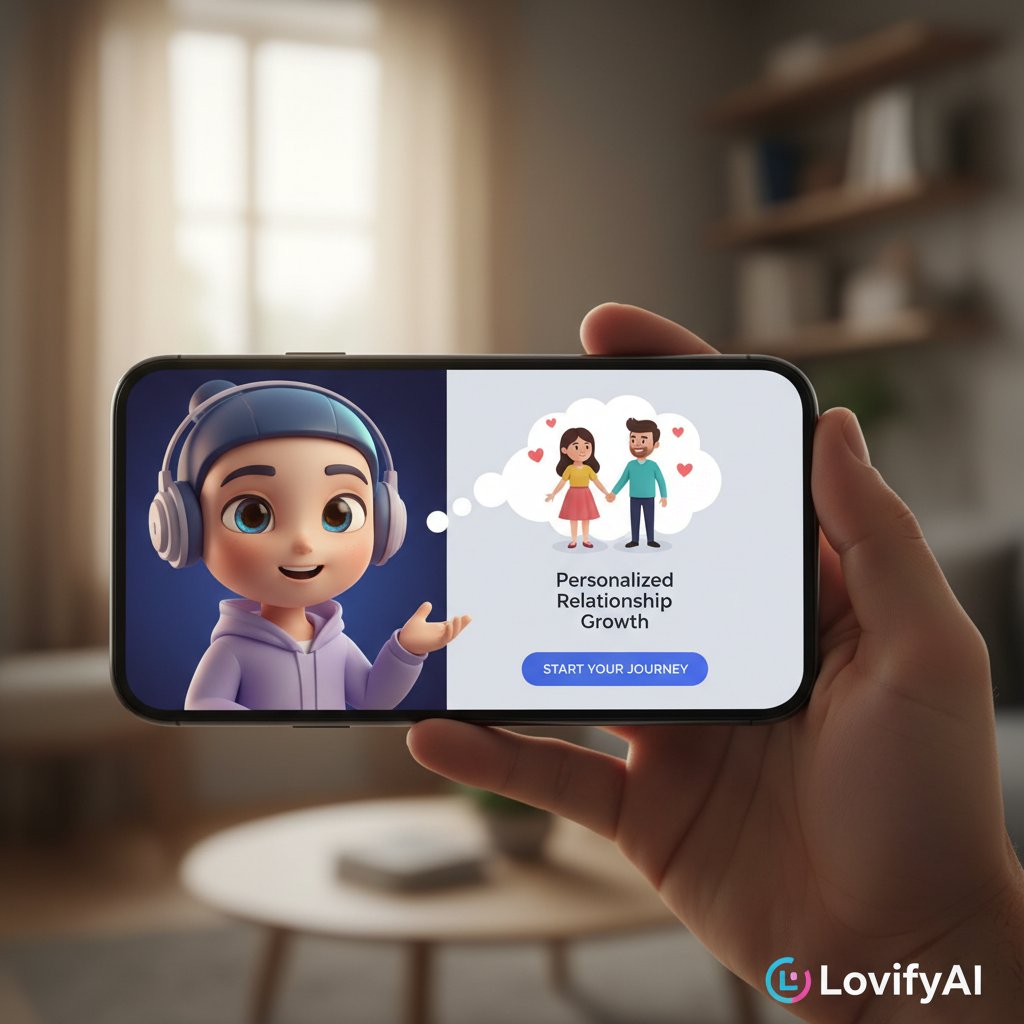
In a world where therapy can be costly and schedules inflexible, AI-driven platforms like lovify.ai are reshaping how couples access support. These tools use data to identify patterns, offer unbiased feedback, and suggest actionable strategies that go beyond generic self-help. The AI never gets tired, never judges, and adapts to your needs in real time.
Accessible anytime, these platforms fill gaps left by traditional models—offering immediate responses, privacy, and evidence-based insights. It’s not about replacing human connection; it’s about amplifying it. For those seeking relationship improvement without generic self-help, AI support is no longer a novelty—it’s fast becoming indispensable.
Conclusion: rewriting the rules of lasting love
Synthesis: what we’ve learned and what to unlearn
At the end of this brutally honest journey, a few truths stand tall:
- Generic self-help advice, no matter how well-intended, usually fails to address real-world complexity.
- Effective relationship improvement is rooted in context, research, and radical honesty.
- Embracing discomfort, imperfection, and failure is not only necessary—it’s transformative.
- Tools like AI relationship coaches and group therapy offer new pathways when traditional advice falls short.
- Myths and clichés are best left behind; what endures is curiosity, vulnerability, and personalized growth.
These aren’t just abstract insights—they’re actionable weapons against a culture of superficial solutions. If you’re ready to rewrite your relationship story, the real work starts now.
Your next move: putting radical honesty into practice
Ready to break the cycle? Here’s how to move forward.
- Audit your advice diet: Toss out anything that doesn’t fit your real context.
- Name your attachment patterns and relational triggers.
- Try one research-backed communication framework and track your results.
- Embrace vulnerability: share something uncomfortable and see what shifts.
- Reach for support—be it a friend, group, therapist, or AI coach—when you hit resistance.

Lasting love isn’t handed out in a clickbait article or a feel-good Instagram post. It’s carved out of messiness, risk, and relentless self-examination. The most radical move? Refuse the comfort of clichés, and meet your relationship where it actually lives—flaws and all.
For more research-backed, authentic relationship guidance and to explore AI-powered support, visit lovify.ai.
Research phase encountered an error. Proceeding with standard article generation.
Frequently Asked Questions
Why doesn't generic self-help advice work for relationships?
Generic self-help advice fails because it relies on one-size-fits-all platitudes that ignore nuanced, evidence-based research and deeper psychological, cultural, and contextual factors. While the self-help industry generates endless tips like 'never go to bed angry' or 'compromise is key,' these recycled scripts leave couples spinning in circles rather than achieving lasting change.
How large is the self-help industry, and does it deliver results?
The self-help industry is worth $13 billion and grows 5-7% annually according to the Global Wellness Institute. However, consumer satisfaction doesn't keep pace with demand, indicating that while the industry booms in size, actual results lag behind.
What does the article claim actually works for relationship improvement?
The article states there are no magic hacks for relationship improvement, only eye-opening strategies, uncomfortable truths, and actionable insights grounded in research. It also explores new frontiers like AI relationship coaching as part of authentic relationship improvement.
When did the self-help industry begin focusing on relationships?
The roots of the self-help industrial complex trace back to the 1930s, when Dale Carnegie's 'How to Win Friends and Influence People' sold millions with its one-size-fits-all optimism, though the article indicates relationship advice has since become an even larger part of the modern self-help landscape.